Quantum computing has taken giant strides in 2025, moving from theoretical experiments to real-world breakthroughs. From quantum error correction to 1,000+ qubit processors, researchers are now closer than ever to harnessing the full power of quantum mechanics to solve problems classical computers can't.
In this blog, we’ll dive deep into the latest advancements, what they mean for the future of technology, and how industries are preparing for a quantum leap.
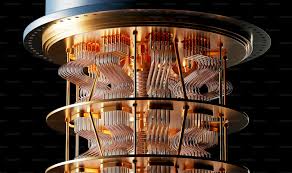
💡 What is Quantum Computing?
Quantum computing leverages the laws of quantum mechanics, using qubits instead of traditional bits. Unlike classical bits, which are either 0 or 1, qubits can be in a superposition of both states simultaneously.
- Superposition: The ability of a qubit to be in multiple states at once.
- Entanglement: A strong correlation between qubits, allowing instant state changes.
- Quantum Interference: Helps zero in on correct answers by enhancing probability paths.
These properties allow quantum computers to perform computations in parallel, promising to revolutionize cryptography, AI, material science, and more.

2025 Highlights in Quantum Computing
This year saw breakthroughs across multiple quantum platforms, including superconducting, photonic, and topological qubits. The quantum race among IBM, Google, Microsoft, Intel, and startups like Rigetti, IonQ, and Xanadu intensified with significant announcements.
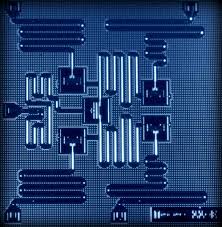
1. Error Correction and Logical Qubits
One of the most significant hurdles in quantum computing has been qubit fragility, where environmental noise causes decoherence, disrupting calculations. In 2024, Google’s Quantum AI team made a landmark achievement with their Willow chip, demonstrating exponential error suppression as the number of qubits increased. By linking 105 physical qubits to form a logical qubit, they achieved a one-in-1,000 error rate per computational cycle, surpassing a critical threshold for scalable quantum computing. This breakthrough, published in Nature, marks a pivotal step toward fault-tolerant systems.
Similarly, Harvard, MIT, and QuEra Computing developed techniques for error-corrected logical qubits using Rydberg atoms. Their system, with 48 logical qubits, allows dynamic reconfiguration using laser tweezers, reducing error propagation and enhancing scalability. This work, supported by DARPA, suggests that fewer qubits than previously thought may be needed for practical quantum computers.
Similarly, Harvard, MIT, and QuEra Computing developed techniques for error-corrected logical qubits using Rydberg atoms. Their system, with 48 logical qubits, allows dynamic reconfiguration using laser tweezers, reducing error propagation and enhancing scalability. This work, supported by DARPA, suggests that fewer qubits than previously thought may be needed for practical quantum computers.
2. Scalable Quantum Architectures
Microsoft’s Majorana 1 chip, introduced in February 2025, represents a paradigm shift. Built on a topological core using Majorana particles, this chip enhances qubit stability and reduces error correction overhead. Microsoft’s approach integrates fault tolerance directly into the hardware, aiming for a million-qubit system capable of solving industrial-scale problems. The chip’s topoconductor material, a new state of matter, is a breakthrough in materials science, enabling smaller, faster, and more reliable qubits.
Nord Quantique also made strides with a compact physical qubit featuring built-in error correction. Their design, scalable to 1,000 logical qubits by 2031, consumes significantly less power than classical supercomputers, potentially breaking RSA encryption in an hour compared to nine days for a supercomputer.
3. Quantum Randomness and Cryptography
In March 2025, Quantinuum’s 56-qubit trapped-ion quantum computer, in collaboration with JPMorganChase, demonstrated certified randomness—a process where truly random numbers are generated and verified by classical supercomputers. This breakthrough, published in *Nature*, has profound implications for cryptography, ensuring secure, uncrackable passkeys for encrypted communications. The system’s high fidelity and all-to-all qubit connectivity outperformed classical systems by a factor of 100, marking a practical quantum advantage.
4. Quantum Image Processing
Quantum computing is also revolutionizing image processing. A novel protocol combining the Flexible Representation of Quantum Images (FRQI) and a modified Quantum Hadamard Edge Detection (QHED) algorithm enables faster edge detection for high-resolution images. Unlike classical algorithms, which slow down with large datasets, this quantum approach operates at constant time complexity, promising applications in medical imaging, astronomical observation, and computer vision.
5. Industry Applications and Cloud Access
Quantum computing is becoming more accessible through cloud platforms offered by IBM, Google, and Amazon. In 2024, these platforms expanded, allowing researchers and businesses to experiment with quantum processors without owning hardware. IBM’s Quantum System Two, with a 156-qubit chip, runs 50 times faster than its predecessor, enabling practical scientific studies. Meanwhile, NASA’s Quantum Artificial Intelligence Laboratory (QuAIL) is leveraging quantum computing for mission planning and spacecraft optimization, processing millions of trajectories simultaneously.
Challenges on the Horizon
Despite these advancements, several challenges persist: -
Scalability: Achieving millions of qubits requires innovations in cryogenic systems and qubit connectivity. IBM’s Condor processor, with 1,121 qubits, represents progress but falls short of the million-qubit goal (IBM Quantum, 2024). -
Decoherence: Qubits remain sensitive to noise. Advances like Nord Quantique’s bosonic qubits and Oxford’s trapped-ion systems are promising but require further refinement (Nord Quantique, 2025).
Cryptographic Threats: Quantum algorithms like Shor’s could compromise RSA encryption, necessitating quantum-resistant protocols such as BB84 quantum key distribution (Nature Communications, 2024).
Commercialization: While cloud platforms enable experimentation, widespread commercial adoption awaits more robust hardware and software solutions.
The Path Forward
The breakthroughs of 2024 and 2025 signal a turning point for quantum computing. By 2031, Nord Quantique aims to deliver a 1,000-logical-qubit system, while Microsoft targets a million-qubit architecture.
These advancements could transform:
Pharmaceuticals: Simulating complex molecules for drug discovery, a task classical computers struggle with.
Climate Science: Enhancing weather predictions and optimizing carbon capture through quantum machine learning.
Finance: Accelerating risk analysis and portfolio optimization via quantum-enhanced Monte Carlo simulations.
Conclusion
Quantum computing is poised to redefine technology, with 2025 marking significant progress in error correction, scalable architectures, and practical applications. While challenges like decoherence and scalability remain, the collaborative efforts of academia, industry, and governments are driving the field forward. As quantum systems become more accessible through cloud platforms, their impact on science, industry, and society will only grow. For further reading, explore resources from [Google Quantum AI](https://quantumai.google), [Microsoft Azure Quantum](https://azure.microsoft.com/en-us/solutions/quantum-computing/), or [IBM Quantum](https://www.ibm.com/quantum).
References
- Google Quantum AI. (2024). Willow chip error correction breakthrough.
- Harvard, MIT, QuEra Computing. (2024). Logical qubits with Rydberg atoms.
- Microsoft Research. (2025). Majorana 1 chip announcement.
- Nord Quantique. (2025). Scalable qubit design for 2031. - Quantinuum & JPMorganChase. (2025). Certified quantum randomness.
- Quantum image processing protocol. (2024).
- IBM Quantum. (2024). Quantum System Two performance metrics.
- NASA QuAIL. (2025). Quantum optimization for mission planning.
- Quantum-resistant cryptography. (2024).
Note: The images used are for illustraion purposes only, C-Tech doesn't own the license for the images, views exppressed here are purely for learning purpose.


Comments (1)
Eve Adams June 27, 2025 16:38
Mind-blowing article! Quantum computing is truly fascinating.